
Handcrafted vs Machine-Made Jewellery: What's the Difference?

Every piece of jewellery you own was made in one of two ways. Either a skilled artisan shaped it by hand, or a machine pressed it out of a mould. Both methods have been around for a long time, and both produce pieces that people wear and love every day.
But the process behind each one is very different, and so is what you get at the end of it. When you understand handcrafted vs machine-made jewellery, the way you pick, wear, and gift your pieces starts to feel a lot more intentional. Here is a simple, honest look at what sets the two apart and where each one works best.
What Does Handcrafted Jewellery Actually Mean
When a piece of jewellery is handcrafted, a skilled artisan shapes it using hand tools, traditional techniques, and years of training passed down through families and communities. In places like Jaipur, India's historic centre for artisan jewellery, these techniques include enamelling, fretwork, hand-painting, Meenakari, and tarkashi (brass wire inlay). Each method requires patience and precision that no shortcut can replace.
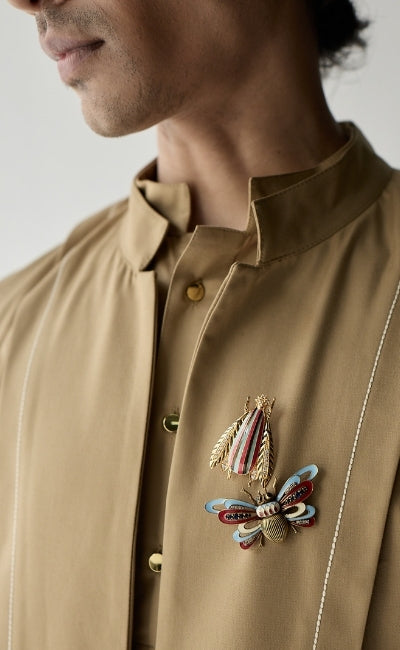
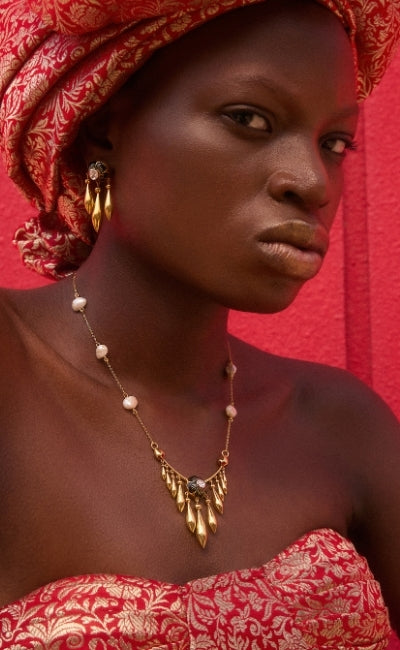
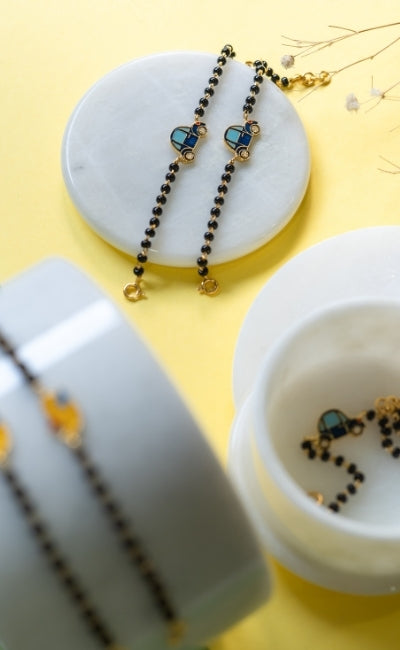
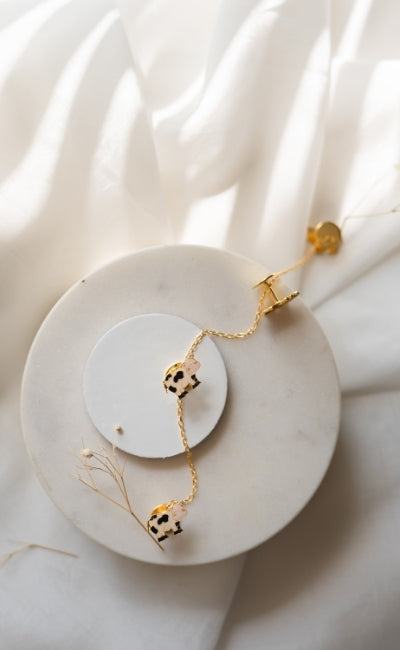
A handcrafted piece goes through multiple stages. The artisan starts with raw metal, then hammers, files, solders, enamels, and polishes it by hand. At AZGA, for instance, artisans work in brass with 22kt gold plating, applying rich enamel and hand-painted detailing across jewellery for women and men. Every piece carries the subtle imprint of the hands that made it.
How Is Machine-Made Jewellery Different
Machine-made jewellery follows a very different path. A design is created digitally, a master mould is prepared, and molten metal is poured into it again and again. Machines cut, stamp, and polish the pieces in large batches. The result is hundreds of identical items, all finished in a fraction of the time it would take an artisan.
The advantage here is speed and cost. Machine-made pieces are faster to produce and cheaper per unit. They offer consistency in shape and symmetry that suits large-scale retail. But that same consistency also means every piece looks and feels the same. There is no variation, no trace of a maker's hand, and no room for the small details that give jewellery its personality.
Why Does Handcrafted Jewellery Feel Different When You Wear It
Texture and Weight You Can Sense
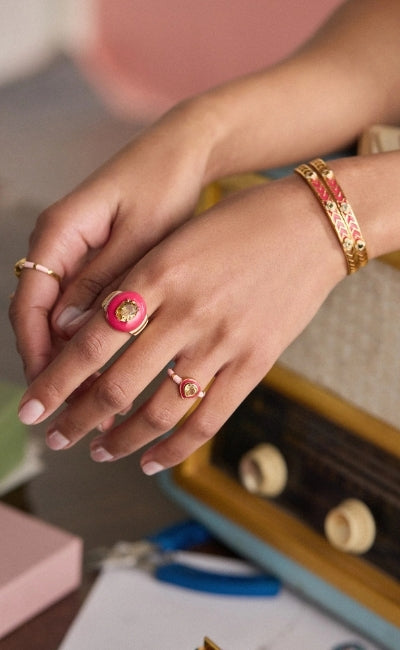
One of the first things you notice when you put on a handcrafted piece is how it sits against your skin. The finish is slightly different from machine-made jewellery because it has been polished by hand, not buffed by a rotating drum. The weight often feels balanced and intentional. AZGA's enamel bangles, for example, are shaped and enamelled individually by artisans, and that care comes through in how they rest on your wrist.
One-of-a-Kind Character
No two handcrafted pieces are perfectly identical. A slight variation in enamel colour, a gentle ripple in the metal, a brushstroke that sits differently on each piece. These are not flaws. They are proof that a real person finished the piece with their own hands. If you look at AZGA's Zebra Hand Painted Bangles, painted by miniature artists in Jaipur, you will see tiny, beautiful differences that a machine could never replicate.
Why Does Handcrafted Jewellery Cost More
This is one of the most common questions, and the answer is refreshingly simple. Time.
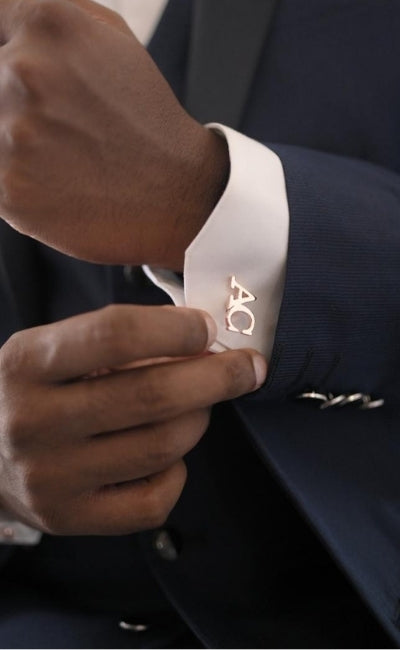
A single handcrafted pair of enamel cufflinks can take several hours, sometimes days, to complete. The artisan selects the metal, shapes it, applies enamel by hand, fires it at high temperatures so the powdered glass fuses to the brass, and then polishes the surface until it is lustrous and smooth. Each step requires skill that has been refined across generations.
Machine-made jewellery, on the other hand, can produce the same quantity in a matter of minutes once the mould is ready. Labour costs are lower, material use is standardised, and there is no variation to account for.
So when you ask why does handcrafted jewellery cost more, the answer lies in the hours of skilled work, the quality of materials, and the small-batch production that goes into every single piece. You are paying for the artisan's hands, their training, and the heritage behind the techniques they use.
Can Machine-Made Jewellery Still Work for You
Absolutely. Machine-made jewellery serves a purpose, and it would be unfair to dismiss it entirely. If you need something quick for a casual occasion, or if you want to try a new style without committing to a larger investment, machine-made pieces can fill that role.
Where machine-made jewellery falls short is in longevity, personalisation, and emotional value. A factory-produced piece is often designed for short-term wear and made with materials that may not hold up over years. Handcrafted jewellery, especially when made in brass with 22kt gold plating or 92.5 sterling silver, is built to stay with you. The finish is designed to age gracefully.
How Do You Tell Handmade and Factory Jewellery Apart
The difference between handmade and factory jewellery becomes easier to spot once you know what to look for.
Weight and feel
Handcrafted pieces often have a satisfying weight because the metal has been worked by hand rather than pressed thin by a machine.
Surface details
Look closely at the finish. Handcrafted jewellery may have gentle texture variations, brushstroke marks in hand-painted areas, or tiny asymmetries in enamel application. Machine-made pieces tend to have an absolutely uniform surface.
Edges and joints
In handcrafted pieces, joints are soldered individually and refined by hand. Machine-made jewellery may show clean seam lines from moulds.
Packaging and provenance
Brands that invest in handcrafting will tell you where and how the piece was made. AZGA, for example, notes that each piece is handcrafted by artisans in Jaipur and dispatched in 3 to 10 working days because many items are made to order.
Why Is Handmade Jewellery Special Enough to Gift
When you give someone a handcrafted piece of jewellery, you are giving them more than an accessory. You are offering something that was made with intention and finished with care.
That is why handmade jewellery is special for weddings, birthdays, anniversaries, and personal milestones. AZGA's Double Initial Cufflinks, where you can personalise a pair with someone's initials in enamel, turn a simple gift into a keepsake. A pair of handcrafted earrings or a hand-painted bangle becomes a piece the recipient reaches for again and again, not because it was expensive, but because it carries meaning.
A handcrafted piece of jewellery asks you to slow down. To notice the details. To value the hands that made it. And that is a beautiful thing to carry with you, whether you wear it yourself or place it in someone else's hands.
Browse AZGA's full collection of handcrafted jewellery to find a piece that speaks to you.
Frequently Asked Questions
Q. Is handcrafted jewellery more durable than machine-made jewellery?
Handcrafted jewellery is often more durable because artisans pay close attention to how the metal is shaped, joined, and finished. Pieces made in brass with 22kt gold plating or 92.5 sterling silver are built to last with proper care.
Q. Can you personalise machine-made jewellery?
Personalisation options are limited with machine-made pieces since the designs are fixed by moulds. Handcrafted jewellery offers far more flexibility for initials, custom colours, and bespoke motifs.
Q. How long does it take to make a handcrafted piece of jewellery?
It depends on the technique and complexity. A hand-painted bangle or enamel cufflink pair can take several hours to a few days, as each step, from shaping to firing to polishing, is done by hand.
Q. Why is handcrafted jewellery a better gift than machine-made?
A handcrafted piece carries the warmth of the maker's effort and can often be personalised. That makes it more meaningful for occasions like weddings, birthdays, and anniversaries where the thought behind the gift matters.
Q. Where can I buy genuine handcrafted jewellery in India?
Look for brands that are transparent about their making process, materials, and artisan partnerships. AZGA, based in Jaipur, handcrafts all its jewellery in brass with 22kt gold plating and 92.5 sterling silver through skilled local artisans.



Leave a comment
This site is protected by hCaptcha and the hCaptcha Privacy Policy and Terms of Service apply.