


How to Stack Bracelets: A Complete Layering and Mixing Guide

Morning light spills across a dressing table. A few bracelets lie scattered beside a watch, a ring, perhaps a small velvet box. One bracelet slips onto the wrist easily enough. Add another, and the wrist begins to speak in a different language altogether. Metal meeting metal. Colour brushing softly against skin. A small arrangement of form and movement.
Understanding how to stack bracelets begins here. Bracelet layering is less about quantity and more about composition. A considered stack creates rhythm at the wrist. One piece introduces structure. Another adds lightness. A third offers colour or texture. The wrist becomes a canvas for subtle design.
How to Stack Bracelets for Women
A well-composed bracelet stack rarely happens by accident. The most elegant stacks follow a few simple principles that allow each bracelet to remain visible while still belonging to the whole.
Begin with a Focal Bracelet
Every successful stack begins with a centrepiece. The focal bracelet anchors the arrangement and determines the visual direction of the stack.
A focal piece often carries one of the following qualities:
- Prominent Colour
- Noticeable Texture
- Wider structure
- Sculptural detail
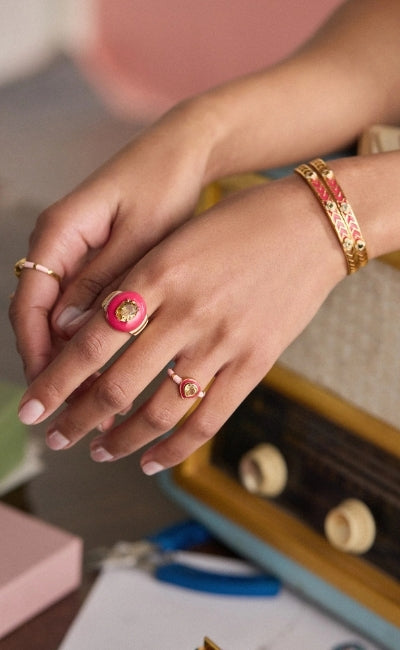
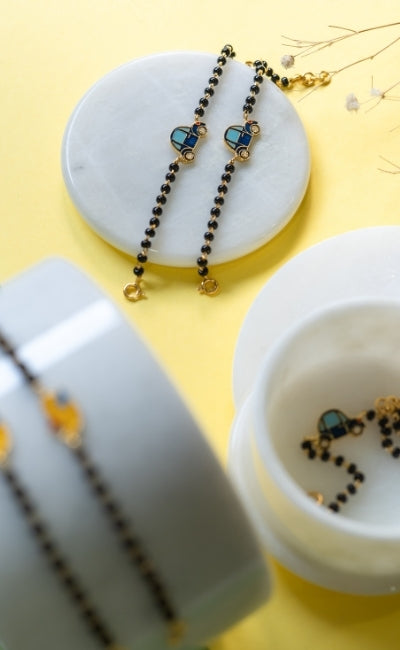
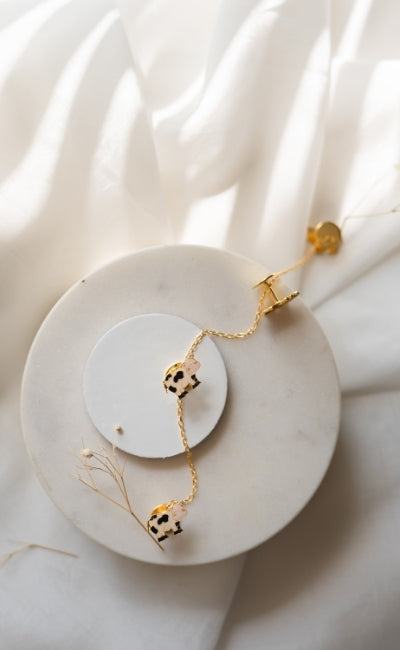
An enamel bracelet provides both colour and architectural clarity.
Frame the Centre with Lighter Layers
Once the anchor bracelet is chosen, slimmer bracelets introduce balance. Thin chain bracelets, delicate bangles, or subtle gemstone pieces create movement.
A reliable stacking structure often follows this rhythm:
- Slim bracelet
- Anchor bracelet
Such a proportion prevents the wrist from appearing heavy while still allowing the centre piece to command attention.
Keep the Stack within Proportion
A common mistake when learning how to stack bracelets involves adding too many layers. Elegance often lies in restraint.
A well-balanced stack typically occupies one-third to half of the forearm. Beyond that, bracelets begin to compete with each other rather than cooperate.
Comfort remains equally important. Bracelets should shift gently with the wrist rather than twist or bunch.
Mixing Metals and Textures in Stacking Bracelets
Visual depth in stacking bracelets comes from contrast. Metal tones, finishes, and surfaces introduce subtle complexity while still maintaining harmony.
A Monochrome Metal Palette
Many women prefer bracelet stacks built around a single metal tone. Gold stacks remain especially popular because the warmth of gold complements both Indian and Western wardrobes.
Gold-plated bracelets reflect light in different ways depending on their surface. A polished bracelet beside a carved or enamelled piece produces dimension without introducing competing colours.
Controlled Mixing of Metals
Contemporary styling welcomes mixed metals, though restraint remains important.
Guidelines for mixing metals:
- Limit the stack to two metal tones
- Repeat each metal at least once
- Avoid placing contrasting metals directly beside each other
When distributed thoughtfully, warm gold and cool silver tones create visual rhythm without appearing accidental.
Texture as a Design Element
Texture brings life to a bracelet stack. Smooth surfaces alone may appear flat. Contrasting finishes introduce quiet interest.
Common textures used in women's bracelets include:
- Polished enamel surfaces
- Hammered metal finishes
- Braided chain links
- Semi-precious stones
Types of Women's Bracelets
Different bracelet styles perform different visual roles within a stack.
|
Bracelet Type |
Role in the Stack |
Styling Advantage |
|
Structure |
Defines the shape of the stack |
|
|
Movement |
Adds fluidity and light |
|
|
Gemstone bracelet |
Accent |
Introduces colour |
|
Centrepiece |
Provides visual weight |
Combining rigid and flexible bracelets also prevents tangling. A solid bangle placed between two chain bracelets acts as a natural divider.
A thoughtful arrangement of women's stacking bracelets might include:
- One enamel bangle
- Two slim chain bracelets
- One gemstone bracelet
Such layering allows each piece to remain visible while forming a cohesive composition.
Everyday Styling Ideas for Stacking Bracelets
Bracelet stacks adapt easily to different occasions. Adjusting scale and materials allows the stack to move from morning errands to evening gatherings without effort.
Minimal Everyday Stack
For daily wear, simplicity often feels most refined.
A practical everyday stack might include:
- One enamel bracelet
- One slim chain bracelet
- One delicate bangle
A handcrafted enamel bracelet from Jaipur introduces colour without overwhelming the wrist.
Evening and Festive Stacking
Festive dressing invites richer bracelet arrangements. Jewellery becomes part of the visual rhythm of the outfit.
An evening stack might include:
- A bold enamel bangle
- Two polished bangles
- A gemstone bracelet
Gold surfaces catch ambient light during movement, lending the wrist a sense of quiet drama.
Stacking Bracelets with a Watch
A watch naturally becomes the anchor of a bracelet stack.
A few simple principles maintain balance:
- Place bracelets on the same wrist as the watch
- Choose slimmer bracelets beside larger watch faces
- Maintain metal harmony between the watch and bracelets
Mistakes to Avoid When Stacking Bracelets
Learning how to stack bracelets also involves recognising when a stack begins to feel crowded.
Common missteps include:
- Too many bracelets competing for attention
- Mixing more than two metal tones
- Dramatic variation in bracelet sizes
- Loose bracelets that twist repeatedly
A restrained stack often carries greater elegance than an overfilled one.
The Versatility of Stacking Bracelets
The beauty of bracelet layering lies in its quiet adaptability. A stack can shift with mood, season, and occasion. One day, it may consist of two simple chains. Another day, it may gather colour, enamel, and polished gold into a more expressive arrangement.
AZGA’s bracelets, shaped carefully in Jaipur by skilled hands, lend themselves naturally to this evolving jewellery stack.
Browse through the collection and compose a stack that reflects your own rhythm of style.
Frequently Asked Questions
Q. How many bracelets should be in a bracelet stack?
Three to five bracelets generally create a balanced stacking of bracelets arrangement.
Q. Can stacking bracelets be worn on both wrists?
Yes, though many prefer a fuller stack on one wrist while keeping the other minimal.
Q. Are stacking bracelets still fashionable?
Stacking bracelets remain widely worn because the style allows personal expression through layering.
Q. Can a watch be included in women's stacking bracelets?
Yes. A watch often serves as the anchor piece around which slimmer bracelets are layered.
Q. Should stacking bracelets match in metal tone?
Matching metals create cohesion, though combining two tones can add subtle contrast.
Q. What bracelets are easiest to stack for beginners?
Slim chain bracelets paired with a structured bangle form the easiest starting point.
Related Posts





Leave a comment
This site is protected by hCaptcha and the hCaptcha Privacy Policy and Terms of Service apply.