



Meenakari Jewellery: The Jaipur Craft Behind AZGA's Enamel Cufflinks

If you have ever held a piece of meenakari jewellery close and noticed the way light moves through its colour, you already know why Jaipur's artisans have kept this craft alive for generations. Every colour is placed by hand, fired into the metal, and sealed there permanently. When that same craft shows up on a pair of enamel cufflinks at a wedding or a boardroom meeting, the effect is quietly striking.
AZGA, a woman-led accessories brand founded in Jaipur by sisters Nikita and Namita Bhandari, has built an entire collection around this craft. Their enamel cufflinks carry the meenakari tradition forward, placing it on something men actually wear every week.
What Is Meenakari Jewellery and Why Does Jaipur Own It
So, what is meenakari jewellery exactly? In simple terms, meenakari is the art of fusing coloured glass or enamel onto a metal surface using heat. The word 'meena' itself comes from the Persian word for glass, and the technique arrived in the Indian subcontinent with Mughal influence. Over time, Jaipur became the primary centre for this art form. The city's goldsmiths and enamel workers refined the craft into something distinctly Rajasthani, using bold colours like deep blue, turquoise, red, and ivory against gold or brass surfaces.
What makes meenakari jewellery from Jaipur special is the layering. Artisans carve fine grooves into the metal surface, fill each one with powdered enamel, and fire the piece so the glass melts and fuses permanently to the brass or gold. The colour does not chip, peel, or fade the way ordinary paint would. Every shade is locked in.
Rajasthani jewellery has always carried a strong identity, from kundan sets to lac bangles to polki work. Meenakari sits alongside these as one of the most recognised craft forms from the region. Unlike oxidised jewellery, which gets its character from a darkened metallic finish, meenakari gets its personality entirely from colour and pattern.
Is Enamel Jewellery the Same as Meenakari
People often ask, is enamel jewellery the same as meenakari? The short answer is that meenakari is a specific type of enamel work. All meenakari is enamel, but not all enamel work is meenakari.
Enamel is a broad term for any process that fuses coloured glass to metal using heat. You will find enamel techniques across Europe, Japan, and the Middle East. French cloisonne, Japanese shippo, and Georgian enamel work all belong to the same family.
Meenakari refers specifically to the style that took root in Rajasthan, shaped by Mughal aesthetics, and perfected by Jaipur's artisan clusters. The motifs draw from floral compositions, Mughal jalis, garden scenes, and nature. The palettes lean warm and jewel-toned.
When AZGA describes its products as enamel cufflinks, the technique behind them is rooted in this meenakari tradition. The artisans who create each pair work from studios in Jaipur, using methods their families have practised for generations.
Where Is Meenakari Jewellery Made and How Does the Process Work
Where is meenakari jewellery made? Predominantly in Jaipur, Rajasthan. The city has been a centre for this craft for centuries, thanks to skilled artisan families who specialise in different stages of the process. Some focus only on carving the metal, others on applying colour, and others on firing and polishing. The craft is collaborative by nature.
The process begins with a brass or gold base. An artisan carves the design into the metal, creating small recessed channels. Powdered enamel is placed into each channel using a thin tool. The piece goes into a kiln, where high temperatures cause the glass to melt and bond permanently with the metal. After firing, the surface is polished by hand until it achieves a glossy, lustrous finish.
For AZGA's enamel cufflinks, each piece is made in brass with a coating of 22kt gold. The vibrant enamel colours sit within the gold-plated surface, creating a rich contrast. Designs range from Mughal-inspired patterns, like the intricate jali motifs on the Mughal Cufflinks, to nature-inspired compositions, like the delicate florals on the Flora Cufflinks.
How Mughal Jewellery Shaped What We See on Modern Cuffs
Mughal jewellery has had an enormous influence on Indian adornment. The Mughals brought a love of colour, symmetry, and garden imagery to the subcontinent, and meenakari was one of the techniques they championed. Court jewellers created elaborate pieces combining kundan, meenakari, and polki work. The finest pieces featured meenakari on the reverse side, meaning even hidden surfaces were decorated with colour.
That same Mughal design sensibility runs through AZGA's enamel cufflinks. The Moroccan Cufflinks borrow geometric precision from Mughal architectural forms. The hand-painted Gulzar Cufflinks reference the Mughal garden tradition, where flowers and birds appear in carefully composed scenes. These are contemporary pieces that carry forward a design vocabulary relevant for centuries.
Why AZGA Chose Meenakari for Enamel Cufflinks
When Nikita and Namita Bhandari started AZGA in 2014, they noticed a gap in men's accessories. Cufflinks, buttons, and lapel pins were either generic imports or poorly finished. Almost nothing combined serious craftsmanship with a modern design sensibility.
Meenakari was a natural fit. AZGA was already based in Jaipur, surrounded by artisan clusters whose enamel skills were refined across generations. The sisters began collaborating with these craftsmen to create enamel cufflinks that felt heritage-rooted and current at the same time.
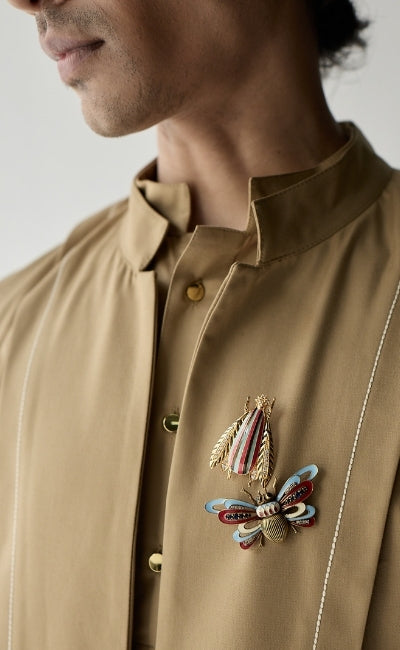
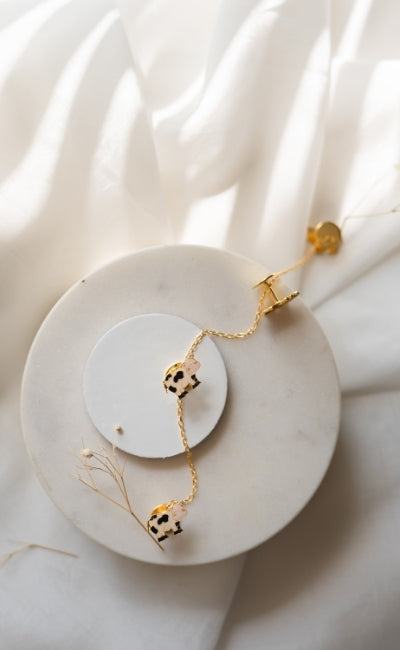
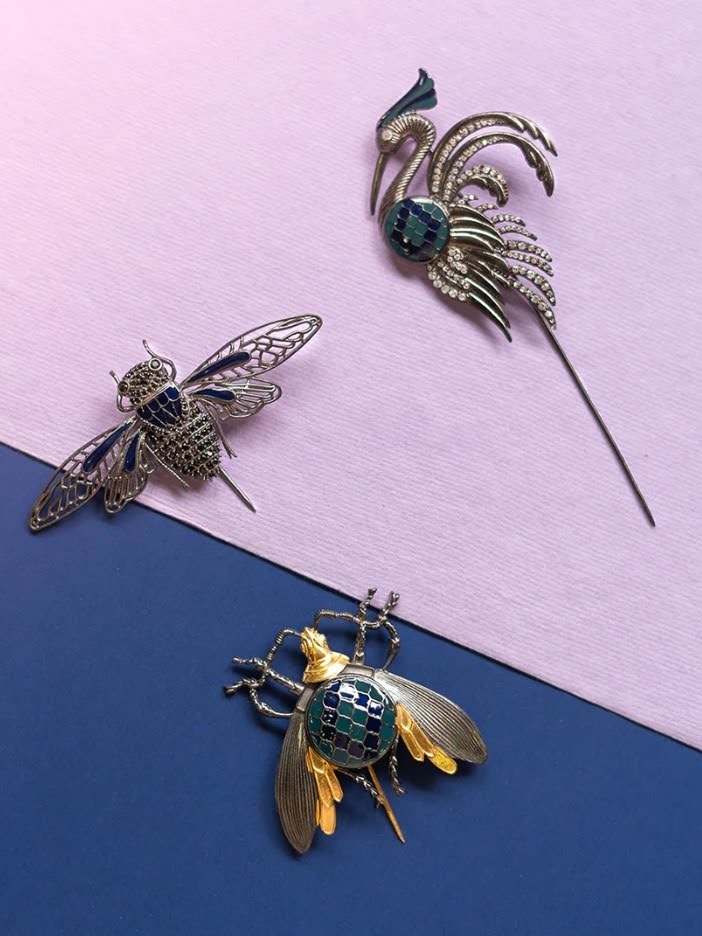
Each pair in the AZGA enamel cufflinks collection is handcrafted, so no two pieces are exactly alike. Slight variations in colour depth and pattern are a signature of handmade work, and AZGA celebrates those imperfections rather than hiding them. The collection includes designs ranging from bold geometric patterns to wildlife motifs like the Bee Enamel Cufflinks and the Sparrow Enamel Cufflinks.
AZGA's products have been showcased at the Victoria and Albert Museum in London as part of The Great Mughals exhibition, and the brand has exhibited at Premiere Vision in Paris 14 times.
When Do You Wear Enamel Cufflinks
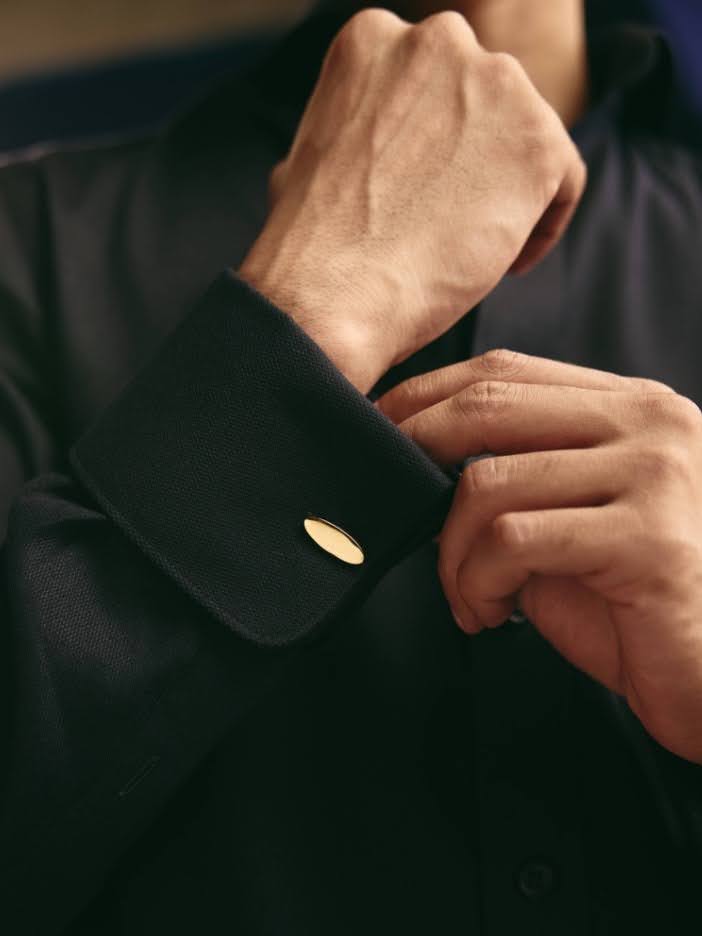
Enamel cufflinks work across more occasions than you might think. A pair of Classic Enamel Cufflinks adds a polished finishing touch to a French-cuff shirt at the office. The Minar Enamel Chain Cufflinks in deep blue bring quiet character to a navy blazer at a dinner. And during wedding season, enamel cufflinks pair beautifully with a bandhgala or sherwani alongside AZGA's Handcrafted Buttons for a coordinated, intentional look.
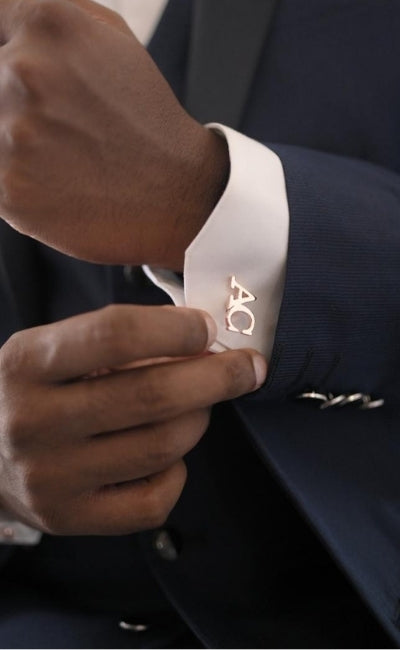
For gift buyers, enamel cufflinks make for a thoughtful, personalised gesture. AZGA also offers Double Initial Cufflinks for those who want to add a monogram, turning a refined accessory into a keepsake.
Whether you are shopping for yourself, for a groom, or for someone who values the art behind what he wears, meenakari-rooted enamel cufflinks from Jaipur carry something mass-produced accessories simply cannot. Every colour was placed by hand. Every piece was fired in a kiln. And every design carries a conversation about heritage, craft, and quiet confidence.
Browse the full AZGA enamel cufflinks collection.
Frequently Asked Questions
Q. What is meenakari jewellery?
Meenakari is a traditional Indian enamel technique where coloured glass is fused onto metal using high heat. Artisans carve grooves into brass or gold, fill them with powdered enamel, and fire the piece in a kiln. The colour bonds permanently with the metal, creating a glossy, lasting finish.
Q. Is enamel jewellery the same as meenakari?
Meenakari is a specific style of enamel work that originated in Rajasthan, India. While all meenakari is enamel, enamel as a category includes many global techniques like French cloisonne and Japanese shippo. Meenakari is defined by its Mughal-influenced motifs, Jaipur craftsmanship, and jewel-toned colour palettes.
Q. Where is meenakari jewellery made?
Meenakari jewellery is primarily made in Jaipur, Rajasthan. The city has been the centre of this craft for centuries, with artisan families passing down the technique across generations. AZGA's enamel cufflinks are handcrafted by skilled artisans in Jaipur using the same foundational meenakari methods.
Q. How do I care for enamel cufflinks?
Clean your enamel cufflinks with a soft cloth after each wear and store them in a jewellery box to prevent scratches. Avoid contact with harsh chemicals, perfumes, and oils. With proper care, the enamel finish stays lustrous for years.
Q. Can I personalise AZGA's enamel cufflinks?
AZGA offers personalised options, including Double Initial Cufflinks where you can add monograms, specific colourways, or bespoke motifs. Personalised pieces make for meaningful gifts for weddings, birthdays, and corporate occasions.




Leave a comment
This site is protected by hCaptcha and the hCaptcha Privacy Policy and Terms of Service apply.